Choosing a freight forwarder is an important decision for businesses that regularly import or export goods. A freight forwarder can help coordinate transportation, documentation, customs requirements and other parts of the shipping process.
However, not every freight forwarder offers the same services or has experience with the same types of shipments. The right choice depends on your cargo, destinations, shipping frequency and logistics requirements.
Here are five practical things to consider before choosing a freight forwarder.
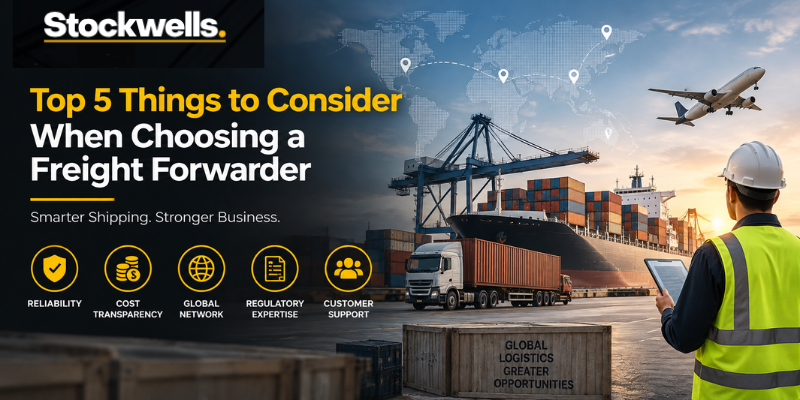
1. Experience and Freight Expertise
Experience matters when a shipment involves multiple stages, countries or logistics providers.
Look for a freight forwarder that understands the type of cargo you are shipping and the routes you use. Experience with your particular requirements can make communication and shipment coordination easier.
You can ask about:
- Experience with your type of cargo
- Import and export experience
- Countries and trade routes covered
- Experience with similar shipment volumes
- Available freight services
A company with extensive experience in one area may not necessarily specialise in every type of freight, so it is useful to check whether its expertise matches your requirements.
2. Freight Services Available
Before choosing a freight forwarder, check whether it provides the freight options you actually need.
Depending on your business, you may require sea freight, air freight, LCL, FCL or a combination of services.
| Freight Service | Common Use |
|---|---|
| Air Freight | Time-sensitive or urgent international shipments |
| Sea Freight | International cargo and container shipments |
| LCL | Shipments that do not require a full container |
| FCL | Shipments requiring a full container |
3. Customs and Documentation Support
International shipping involves documentation and customs requirements. These requirements can vary depending on the country, goods and type of shipment.
Ask the freight forwarder what support is available for:
- Shipping documentation
- Import and export requirements
- Customs procedures
- Commercial invoices and packing lists
- Bills of lading or air waybills
- Other shipment-specific documents
Some freight forwarders also provide customs brokerage services, while others coordinate with separate customs professionals.
Understanding what is included before booking a shipment can help avoid confusion later.
4. Shipment Tracking and Communication
International shipments can pass through several stages before reaching their destination. Good communication and shipment visibility can therefore be useful.
Before choosing a freight forwarder, find out how shipment updates are provided and whether online tracking is available.
You can also ask:
- How will shipment updates be shared?
- Is online tracking available?
- Who should you contact if there is a delay?
- How quickly are changes or issues communicated?
Tracking does not prevent delays, but it can make it easier for businesses to understand where their cargo is during the shipping process.
5. Pricing and What Is Included
Price is important, but comparing freight quotes only by the final number can be misleading.
Two quotes may look different because they include different services, charges or transportation arrangements.
When comparing quotes, check:
| What to Compare | Why It Matters |
|---|---|
| Freight Rate | Cost of the main transportation |
| Origin Charges | Costs associated with handling at origin |
| Destination Charges | Costs applied at destination |
| Customs Services | Whether customs-related work is included |
| Delivery | Whether final transportation is included |
| Insurance | Whether cargo insurance is available separately |
Ask the freight forwarder to explain any charges you do not understand. A clear quotation should make it easier to compare different options.
Questions to Ask Before Choosing a Freight Forwarder
Before making a decision, it can help to ask a few straightforward questions:
- Do you handle my type of cargo?
- Do you provide the freight mode I require?
- Which countries and destinations do you cover?
- What customs support is available?
- How can I track my shipment?
- What services are included in the quotation?
- Are there additional charges I should know about?
- Who will handle communication during the shipment?
The answers can help you understand whether the freight forwarder is suitable for your particular requirements.
What Makes a Freight Forwarder Suitable?
There is no single freight forwarder that is right for every business.
An importer bringing in occasional LCL shipments may have very different requirements from a manufacturer shipping multiple full containers every month. Similarly, an exporter sending urgent goods may prioritise air freight and shipment visibility.
The most useful approach is to compare providers based on your actual cargo, routes, freight mode, customs requirements, service scope and budget.
Frequently Asked Questions (FAQS)
What should I look for in a freight forwarder?
Consider experience, freight services, route coverage, customs support, shipment tracking, communication and the details included in the quotation.
Is the cheapest freight forwarder always the best option?
Not necessarily. A lower quote may exclude services or charges included in another provider’s quotation. Compare the complete scope of each quote before making a decision.
Should I choose a freight forwarder with experience in my industry?
Relevant experience can be useful, particularly when your cargo has specific handling, documentation or transportation requirements.
How important is shipment tracking?
Tracking provides visibility into shipment progress and can help businesses monitor cargo during transportation.
Need Help Choosing a Freight Forwarding Solution?
Have a shipment to move and want to understand your available freight options?
Speak with Stockwells about your air or sea freight requirements, customs brokerage, warehousing and distribution needs.