Importing or exporting goods involves more than moving cargo from one country to another. Businesses also need to coordinate transportation, shipping documents, customs requirements, carriers and delivery arrangements.
This is where freight forwarding for importers and exporters becomes useful.
A freight forwarder helps coordinate different parts of the shipping process and works with carriers and logistics providers to move goods from the point of origin to their destination.
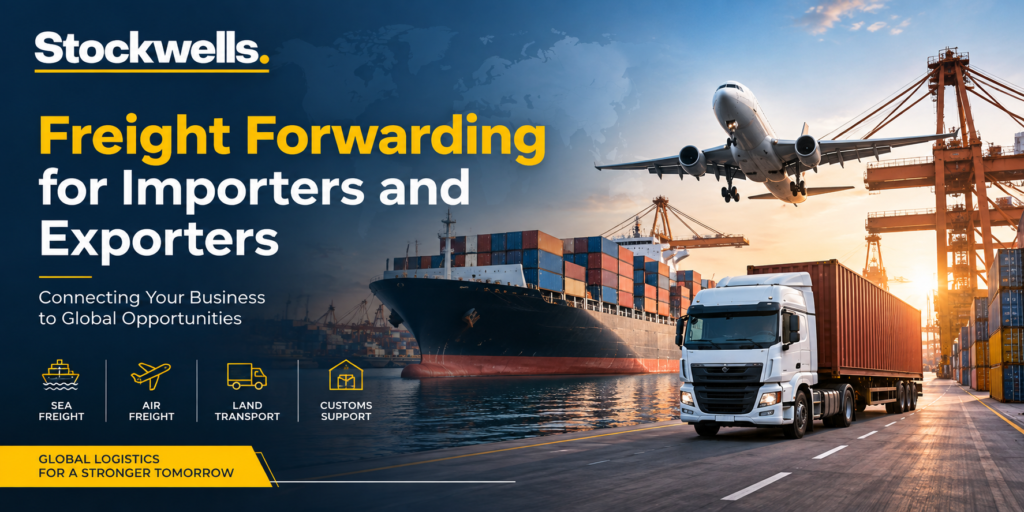
What Is Freight Forwarding?
Freight forwarding is the process of arranging and coordinating the transportation of goods.
A freight forwarder does not necessarily transport the cargo itself. Instead, it works with shipping lines, airlines, transport providers, customs brokers and other logistics partners to organise the shipment.
For an importer or exporter, this means there is a logistics partner helping coordinate the different stages of the freight movement.
How Does Freight Forwarding Work for Importers?
An importer purchases goods from a supplier in another country and needs to bring those goods into the destination country.
A typical import shipment may involve:
Supplier → Cargo Collection → International Freight → Customs → Port/Airport → Local Transport → Delivery
The exact process depends on the goods, origin, destination, freight mode and applicable regulations.
A freight forwarder can help coordinate the relevant stages and keep the importer informed about the shipment.
How Does Freight Forwarding Work for Exporters?
Exporters have the opposite requirement: they need to move goods from their country to an overseas customer or destination.
The process can include arranging transportation from the supplier, preparing shipping information, booking international freight and coordinating destination arrangements.
For regular exporters, having a consistent freight forwarding process can make international shipping easier to manage.
What Does a Freight Forwarder Handle?
The services provided by a freight forwarder can vary, but common responsibilities include:
| Freight Forwarding Activity | Purpose |
|---|---|
| Freight Booking | Arranging air or sea transportation |
| Documentation | Coordinating shipping and commercial documents |
| Customs | Supporting applicable customs requirements |
| Carrier Coordination | Working with shipping lines, airlines and transport providers |
| Tracking | Providing shipment updates and visibility |
| Delivery Coordination | Arranging transportation to the required destination |
Air Freight or Sea Freight?
| Air Freight | Sea Freight |
|---|---|
| Generally faster | Generally slower |
| Often considered for time-sensitive cargo | Commonly used for larger international shipments |
| Suitable for certain smaller or urgent shipments | LCL and FCL options available |
| Airport-based transportation | Port and container-based transportation |
Why Do Importers and Exporters Use Freight Forwarders?
International freight can involve several companies and processes. Managing each part independently can take significant time, particularly when a business handles regular shipments.
A freight forwarder can help by:
- Coordinating international transportation
- Working with carriers and logistics providers
- Supporting shipping documentation
- Assisting with customs requirements
- Arranging LCL or FCL freight
- Providing shipment tracking
- Coordinating delivery arrangements
The main advantage is having a central point for coordinating the different logistics requirements.
What Documents Are Involved?
The documents required for international freight depend on the shipment and destination.
Common documents can include:
- Commercial invoice
- Packing list
- Bill of lading or air waybill
- Import or export documentation
- Customs-related documents
- Certificates or permits where applicable
Requirements can vary depending on the country, type of goods and applicable regulations, so businesses should confirm the documentation needed for their particular shipment.
How Should Importers and Exporters Choose a Freight Forwarder?
Price is important, but it should not be the only consideration.
Before choosing a freight forwarder, businesses should check whether the provider can support their actual requirements.
Consider:
- Air and sea freight capabilities
- Origin and destination coverage
- Experience with the type of cargo
- Customs brokerage or customs support
- LCL and FCL options
- Shipment tracking
- Warehousing and distribution requirements
- Communication and shipment updates
A freight forwarder that understands the business’s shipping requirements can make the overall process easier to coordinate.
Freight Forwarding for Australian Importers and Exporters
Australian businesses importing and exporting goods may need to coordinate international freight with local transportation, customs and distribution requirements.
Stockwells provides freight forwarding services across air and sea freight, along with customs brokerage, warehousing and distribution, port transport and other logistics capabilities.
The appropriate freight solution depends on the cargo, route and requirements of each shipment.
Frequently Asked Questions
What is freight forwarding for importers and exporters?
It is the coordination of transporting goods between countries, including freight booking, documentation, customs-related requirements, tracking and delivery arrangements.
Does a freight forwarder handle customs?
Some freight forwarders provide customs brokerage services, while others coordinate with customs brokers. This depends on the provider and the shipment.
Which is better for importing: air freight or sea freight?
It depends on the shipment. Air freight is generally faster, while sea freight is often considered for larger or less time-sensitive cargo.
What is LCL freight?
LCL means Less than Container Load. It is used when cargo does not require a complete shipping container and can be consolidated with other shipments.
Need Help With Your Import or Export Shipment?
International freight involves multiple stages, and the right coordination can make the process easier to manage. If you are importing or exporting goods to or from Australia, Stockwells can discuss your freight requirements and available air and sea freight solutions.